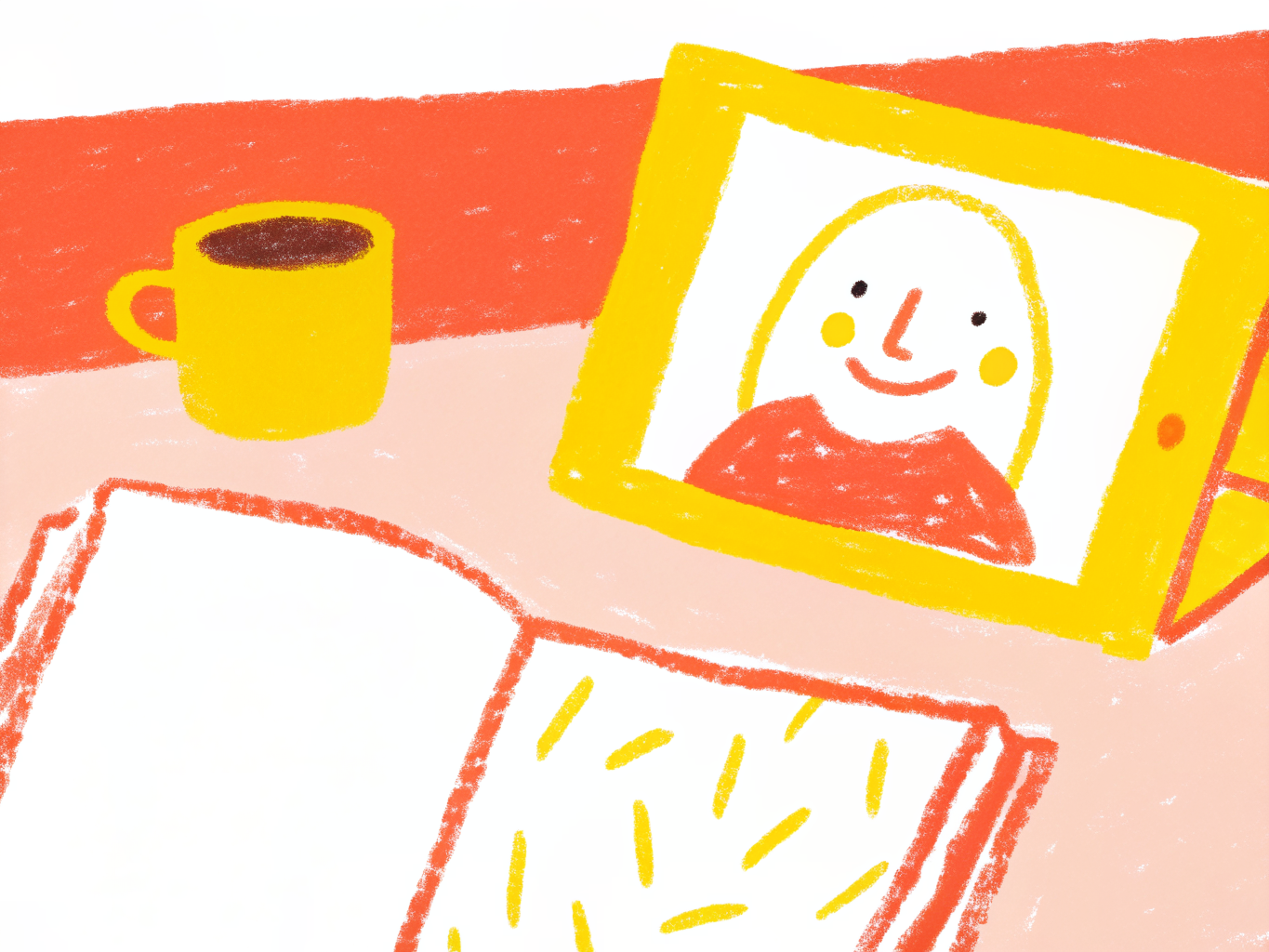
Hand-drawn illustration is a style built from visible, slightly irregular linework and texture, pencil, ink, brush, or crayon, that keeps the human imperfection of drawing by hand even when the work is made entirely on a tablet. It reads as warm, informal, and approachable, the opposite of clean geometric vector flat art. Use it when you want a product or brand to feel personal and made by someone. Skip it when you need authority, density, or pixel-level precision at small sizes.
What defines the hand-drawn style
Strip away the polish and a few traits give the style away:
- Visible linework. The outline wobbles slightly, the way a real pen moves. Nothing is perfectly straight, and that is on purpose.
- Texture. Pencil grain, brush bleed, crayon tooth. The surface looks like it touched paper.
- Imperfect repetition. Two leaves on the same plant are drawn a little differently. That small variation is the charm.
- A human hand behind it. Even when it is made in Procreate, the goal is to look drawn, not generated.
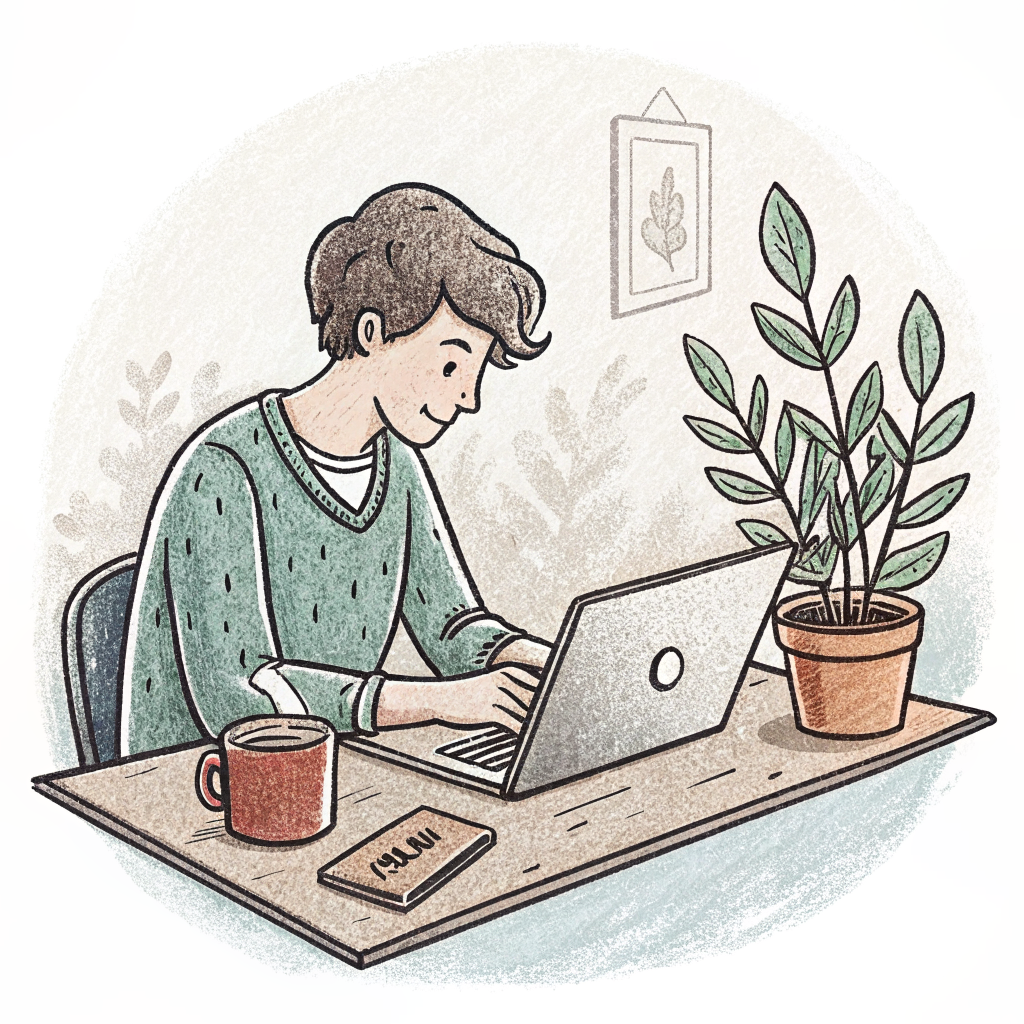
The point is warmth. Where flat illustration says "this is clean and modern," hand-drawn says "a person made this for you." That single quality is why brands reach for it when they want to feel less like software and more like a small studio. It is also why it shows up so often in branding, where one illustrator notes it works for everything from logos to packaging to thank-you cards.
Two roads lead to the same look. Some illustrators still draw on paper and scan the result, but most now work digitally on a tablet, using textured brushes that mimic pencil and ink. The output reads the same, warm and imperfect, yet the digital route stays editable, which matters when you need to recolor a set to a brand palette or fix one illustration without redrawing the whole thing.
Hand-drawn vs flat illustration
These two styles answer different questions. Flat is about how clean a drawing is: solid shapes, no texture, machine-precise edges. Hand-drawn is about how human it feels, where the imperfection is the feature. Most teams pick one as their default and treat the other as the contrast. For the full map of where both sit alongside the rest, see our illustration styles guide.
| Hand-drawn | Flat | |
|---|---|---|
| Feel | Warm, personal, informal | Clean, modern, neutral |
| Linework | Irregular, textured | Crisp, geometric |
| Best for | Brand, editorial, onboarding warmth | UI, dense layouts, small sizes |
| Recolor | Harder (texture fights flat fills) | Trivial |
| Watch out for | Looking messy or inconsistent | Looking generic, like everyone else |
If flat's risk is blending into the sea of identical flat illustration style work, hand-drawn's risk is the opposite: looking unfinished. Both are fixable, and both come down to consistency.
Where hand-drawn illustration works best
Hand-drawn earns its place wherever warmth beats precision:
- Brand and marketing. A hand-drawn hero or a set of spot illustrations signals craft and personality, which is why wellness, education, food, and community brands lean on it.
- Onboarding and empty states. A friendly sketch softens an empty inbox or a first-run screen far better than a clinical diagram does.
- Editorial and long-form. Hand-drawn spot art breaks up an article and feels closer to a magazine page than a dashboard.
- Anything aimed at people, not enterprises. Kids' products, local businesses, and creator tools all gain from the informal touch.
A concrete example: a meditation or journaling app gets more from a loose, sketched character on its onboarding screen than from a precise vector diagram, because the drawing itself signals calm and humanity before the reader processes a single word. The style does part of the messaging for you.
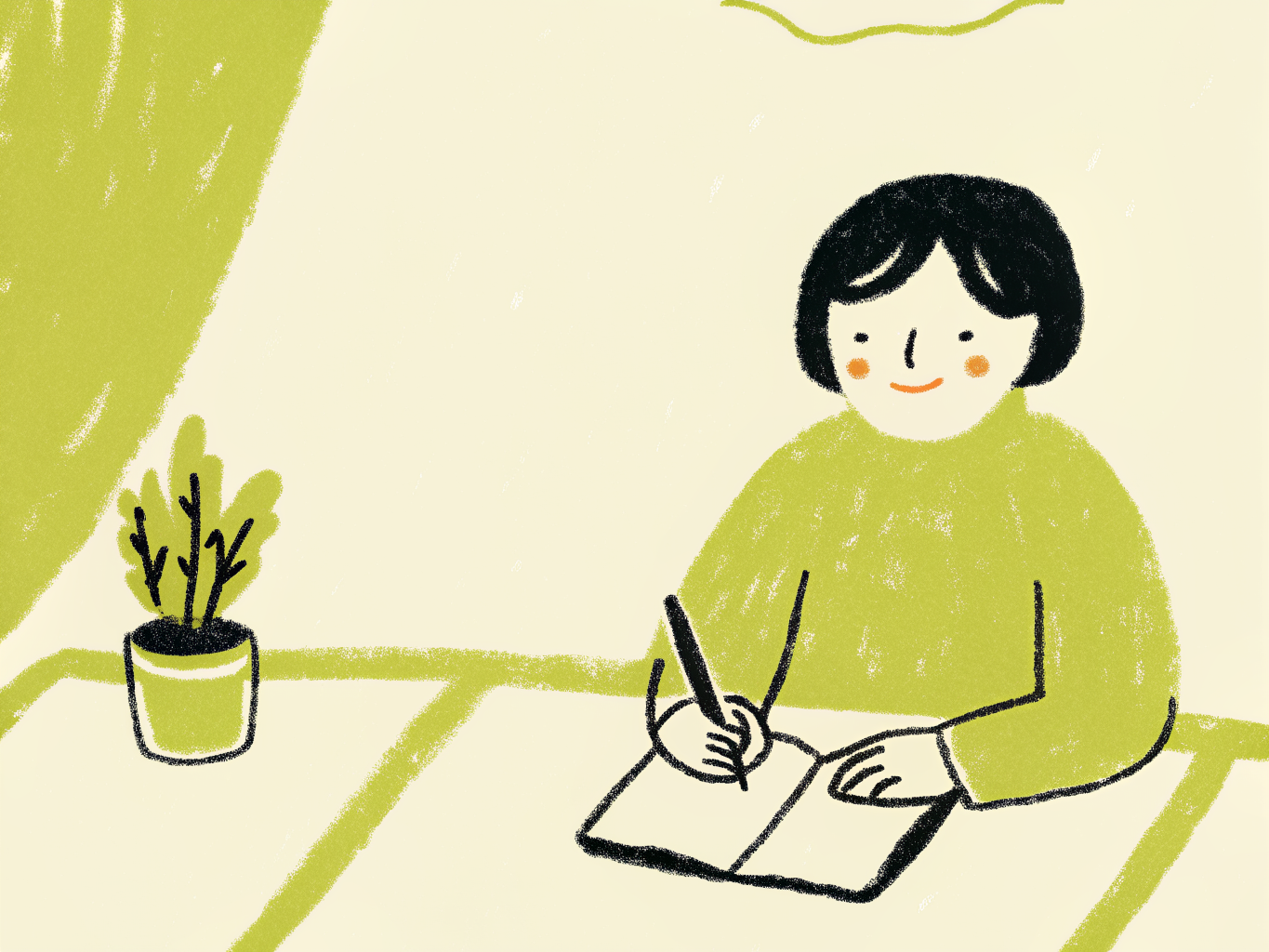
There is a reason the style surged, and it is worth naming. As flat "Corporate Memphis" illustration took over startup landing pages, much of it started to look identical, a backlash captured in nicknames like "Humans of Flat." Hand-drawn work is one of the humanist reactions to that sameness, trading interchangeable polish for something that looks specific to one brand. (Webflow has a good history of how the flat style took over.)
Where it backfires
The warmth has a cost, and pretending it doesn't is how teams misuse the style.
- Dense UI and tiny sizes. Texture and wobble turn to mud at 24px. In a data-heavy dashboard or a row of small spot icons, flat or minimalist illustration reads far cleaner.
- Authority-first contexts. Finance, legal, security, and most enterprise B2B want to look precise and trustworthy. A crayon texture can quietly undercut that.
- Large, consistent systems. The more screens you cover, the harder it is to keep a hand-drawn set feeling like one hand made all of it. Consistency is genuine work here, not a free trait.
A blunt rule of thumb: the smaller and more functional the surface, the less hand-drawn texture helps.
Common mistakes that make it look amateur
Done well, hand-drawn looks crafted. Done carelessly, it just looks unfinished. Here is the difference:
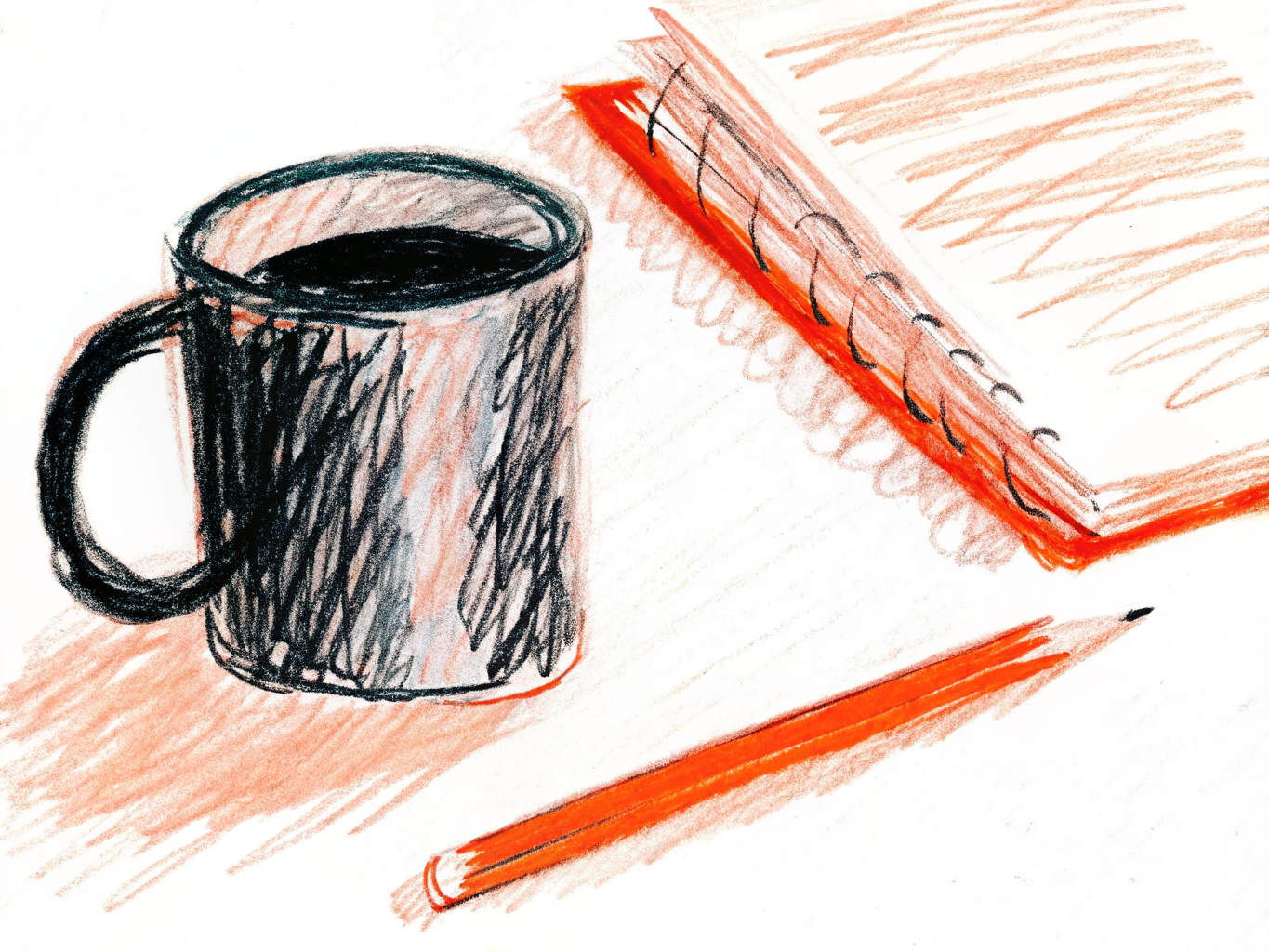
The sketch above is the same style done carelessly: the line weights fight each other and the texture is overdone, so it reads as a rough draft rather than a deliberate choice. Three habits keep hand-drawn work on the right side of that line:
- Keep line weight consistent. Pick a stroke character and hold it across the whole set. Random thick-and-thin is the fastest way to look sloppy.
- Don't fake it with filters. A "rough" filter slapped on a vector flat illustration looks like exactly that. Either commit to the style or use a different one.
- Mind the recolor. Heavy texture resists clean recoloring, so if your brand palette shifts often, test that the set still holds up before you commit to it.
Building a consistent hand-drawn set
A single hand-drawn illustration is easy. A set that looks like one hand made all of it is the real work, and it is what separates a crafted brand from a scrapbook. Three decisions do most of the heavy lifting.
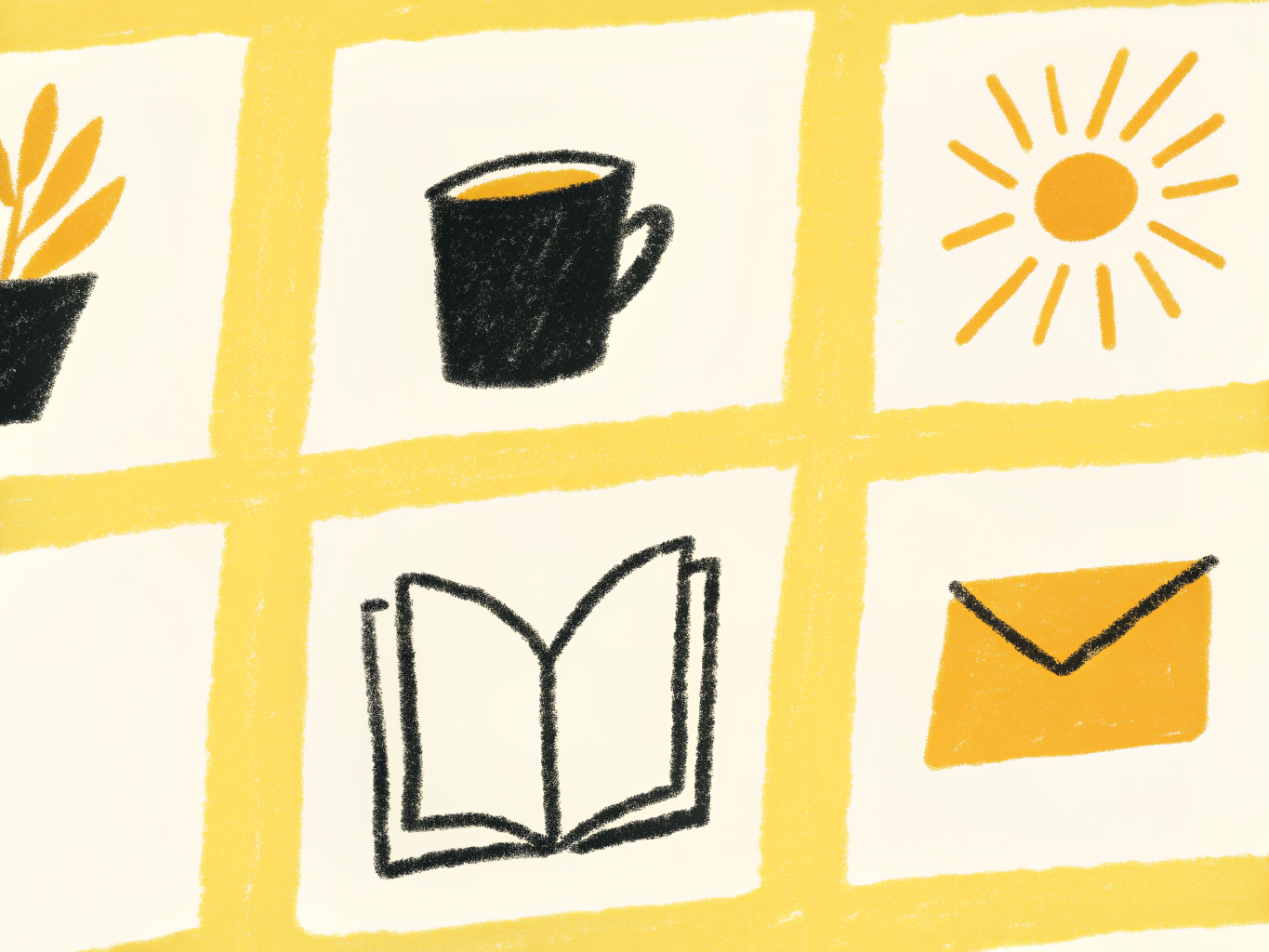
First, lock the line. Pick one stroke character, its weight, its wobble, and whether corners are rounded or sharp, then apply it to every piece. A reader forgives a lot, but mixed line weights across a page read as a mistake, not a choice.
Second, give the palette a rule. Hand-drawn art usually pairs a small set of warm, slightly muted colors with a single accent. Define that palette once and reuse it instead of recoloring each illustration on instinct. A tight palette is what makes ten loose drawings feel like one family.
Third, decide where the style leads and where it supports. A hand-drawn hero on a landing page sets the tone, while the same texture repeated in every tiny UI icon turns to noise. Use the style as the personality of a page, then let cleaner elements carry the dense, functional parts. Pairing a hand-drawn illustration with a simple sans-serif font and generous white space keeps the warmth without tipping into clutter.
Recoloring and customizing hand-drawn illustrations
Most teams do not need bespoke art. They need a ready-made set that matches their brand, which makes recoloring the practical question. Hand-drawn work is trickier here than flat art, because the texture and visible strokes carry their own light and shade, so a flat color swap can fight the linework if the set was not built for it.
The fix is to start from a set designed to recolor cleanly, then test it before you commit. On Pixels Market you can adjust the colors of an illustration directly in the browser and preview the result against your palette before you download, which is faster than opening a file, editing it, and re-exporting for every option. Change the primary color, check that the texture still reads, and only then export.
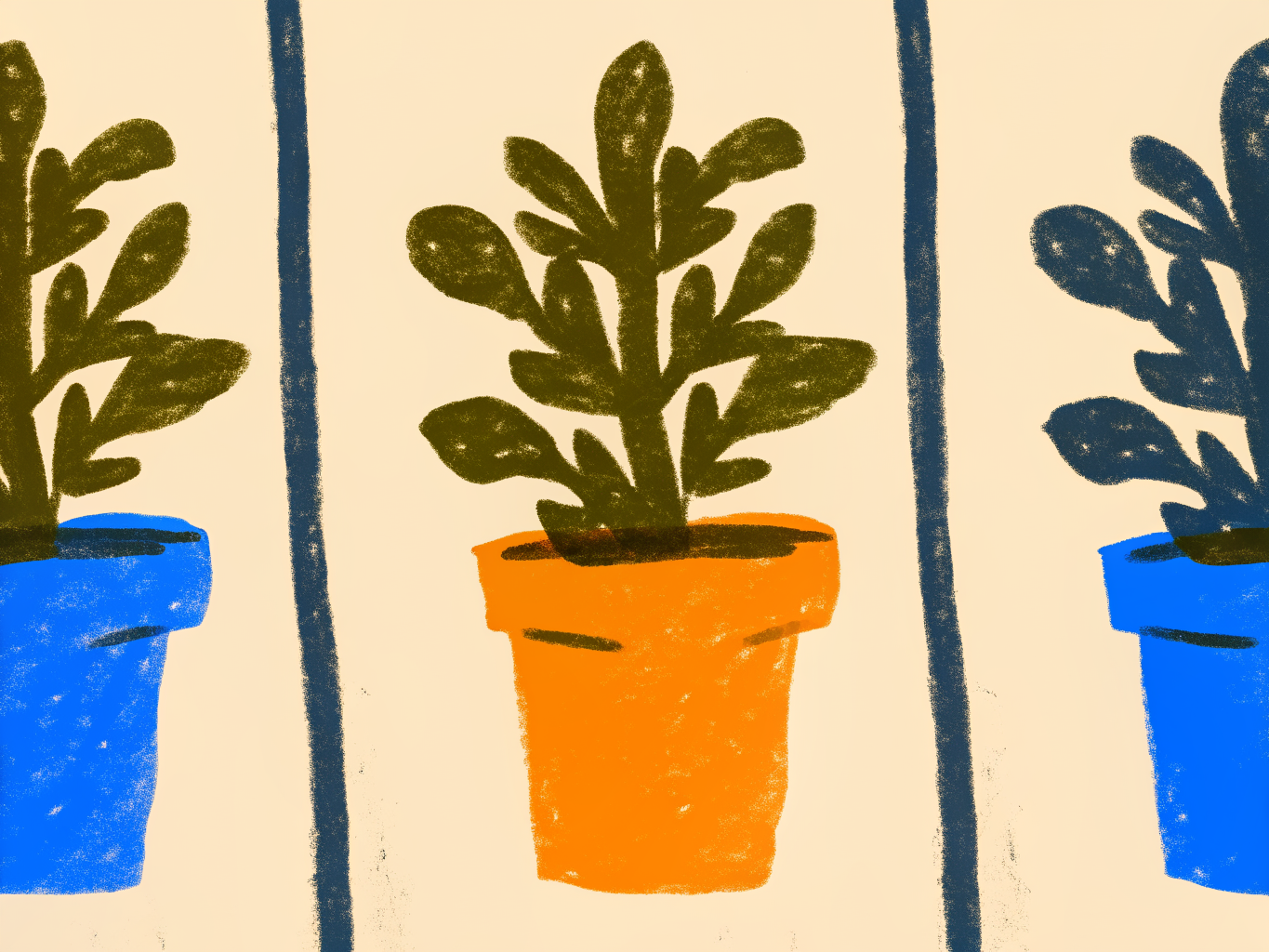
Keep the edits light. Recoloring to a brand palette is fine, but redrawing strokes or layering heavy filters usually breaks the hand-made feel that made you choose the style in the first place. If a set needs that much work to fit your brand, it is the wrong set, and a different hand-drawn collection will get you there faster.
Where to find hand-drawn illustrations
You have two honest options. Commission an illustrator for bespoke work, which gives you something nobody else has but costs real time and money, or start from a ready-made hand-drawn set you can recolor and ship today.
Pixels Market sorts its 14,880 illustrations into 18 named styles, and the hand-drawn, doodle look is a set of its own: 1,210 illustrations drawn in one consistent style. That consistency matters more than raw volume for this look, because a hand-drawn set lives or dies on feeling like one hand made all of it. You can browse the hand-drawn and other styles in our design illustration collection and recolor before you download.
Pixels Market is our own library, so judge accordingly. The catalog is illustrations only, no photos or 3D renders, and it is smaller than a giant like Freepik. On licensing: the free download is a high-resolution PNG with a personal license, and the SVG files plus a commercial license come with the full sets. If you need vector source files or commercial rights, that is the paid path.
Whichever route you take, audit the set the way a reader would. Line up ten illustrations side by side and check that they look related: same line character, same level of texture, same color logic. If one feels drawn by a different hand, it will stand out on your site too, and that is exactly the inconsistency that makes hand-drawn work look amateur.
For more styles to compare against this one, browse our curated illustration collections or the full free illustrations library.